Real vs Marketing "Off-Road": How to Tell If a Camper Can Actually Handle NZ Tracks
Marketing brochures love the words 'off-road' - but what does that actually mean on New Zealand's roughest tracks? Here's how to tell fact from fluff.
Every camper on the market claims to be "off-road ready." Roof racks, some extra ground clearance, a decal with a mountain on it. But there's a big difference between a camper that looks rugged in photos and one that's actually been proven on New Zealand's high country, back-country, and coastal tracks.
If you're planning trips that go beyond sealed roads, that difference matters more than almost anything else on the spec sheet. Here's how to actually tell the two apart.
"Off-road" is not a regulated term
Unlike towing capacity or GVM, there's no industry standard defining what counts as "off-road." Any manufacturer can put the phrase on a brochure. Some genuinely mean it. Others mean "you could probably take this down a gravel driveway without much drama." Both get marketed the same way, which leaves buyers guessing.
That's a real problem in New Zealand, where "getting off the beaten path" often means river crossings, corrugated back-country roads, and unsealed tracks that punish anything not properly built for them.
What genuine off-road capability actually looks like
When you're comparing campers, look past the marketing language and check for these specifics:
The base vehicle, not just the camper body. A camper is only as capable as the 4x4 it's built on. A genuine off-road build starts with a proven 4x4 platform, not a standard van with cosmetic add-ons.
Suspension built for load, not just looks. Off-road suspension needs to handle the added weight of a camper fit-out over rough terrain, not just clear a speed bump.
Real approach and departure angles. These numbers tell you whether the vehicle can actually handle steep entries and exits without scraping or getting stuck, and they're publicly available specs worth asking for.
Water crossing and underbody protection. If a manufacturer can't tell you the wading depth or show you underbody protection, that's a sign the "off-road" claim hasn't been engineered, just implied.
Evidence of real testing. Has the vehicle actually been driven on NZ high country, back-country, or coastal tracks, by real people, on real trips? Or has it only been tested in a factory or on a closed course overseas?
Why this matters beyond the spec sheet
This isn't just about bragging rights. It's about what happens when you're two hours from the nearest sealed road and something doesn't hold up. A vehicle that's only cosmetically off-road can leave you stuck, or worse, damaged, in places where help isn't quick to reach. Genuine capability is what lets you say yes to the track less travelled instead of turning back at the first river crossing.
That's the whole point of getting off-road in the first place: reaching the spots most tourers never see. Ninety Mile Beach. High country stations. West Coast tracks that don't show up on a rental car map. None of that is worth the risk if the vehicle underneath you hasn't actually earned the claim.
How the Hilux Hunter, also known as the MAD TRACKER, is different
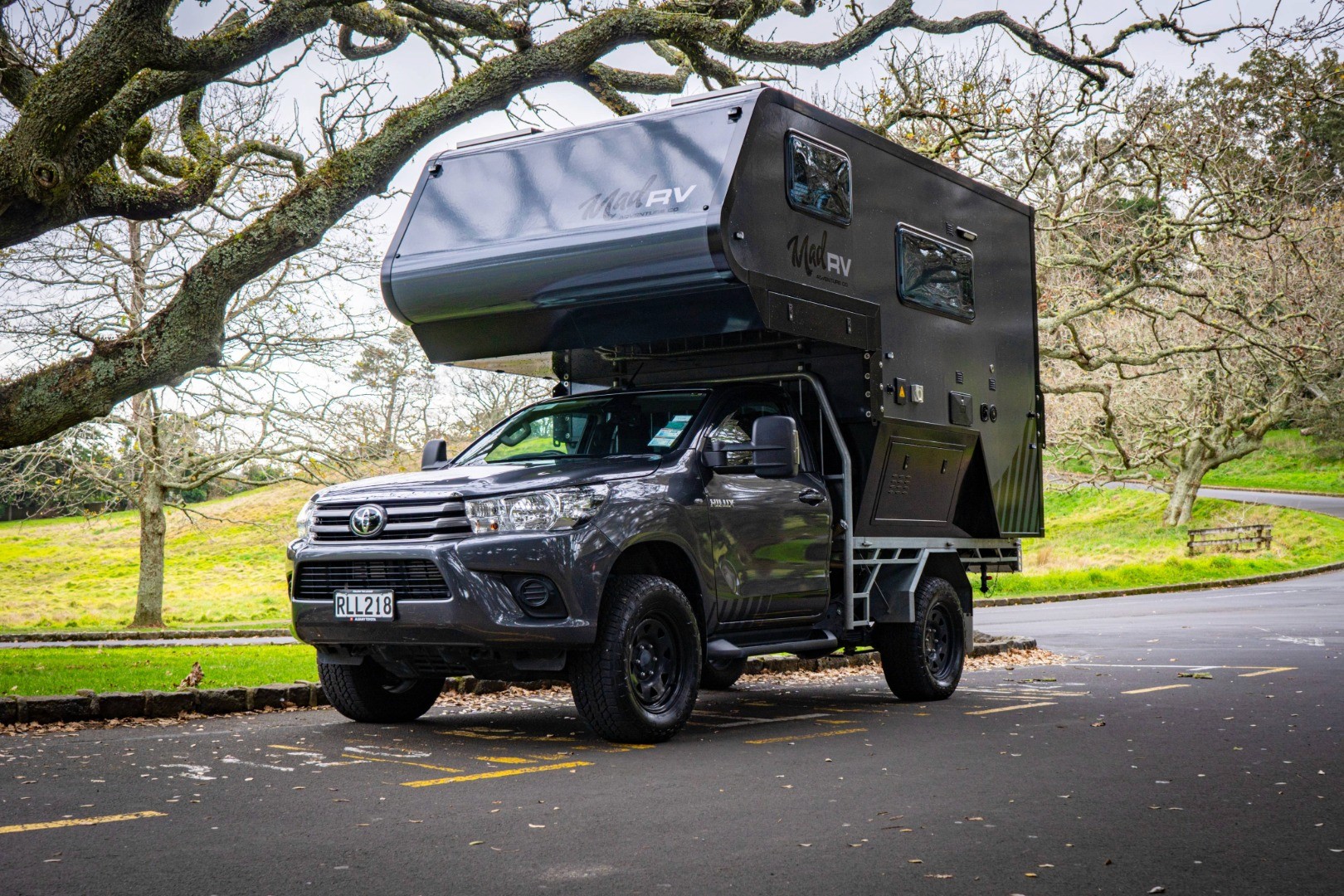
The Hilux Hunter, known through Mad Campers as the MAD TRACKER premium 4WD camper, is built on the Toyota Hilux, one of the most proven 4x4 platforms in New Zealand, and it hasn't just been tested on paper. This exact vehicle has spent years in the Mad Campers rental fleet, driven on real NZ roads and tracks by thousands of renters, not just engineers in a lab.
That's real-world testing you can't fake with a marketing shoot. Every layout, system, and build detail has been refined based on how people actually use these vehicles off the beaten path, which is exactly why we're confident enough to let you try it before you buy it.
The bottom line
Don't take "off-road" at face value. Ask for the specifics: the base vehicle, the suspension, the approach and departure angles, the wading depth, and whether it's actually been proven on NZ terrain. If a brand can't answer those questions clearly, that tells you something too.
Want to test genuine off-road capability yourself? Book a Hilux Hunter (MAD TRACKER) through Mad Campers and try it on real NZ tracks before you commit to buying.